
wedding season · dholki · styling · organza
Dholki Outfit Ideas: Lighter Festive Looks for Winter Nights
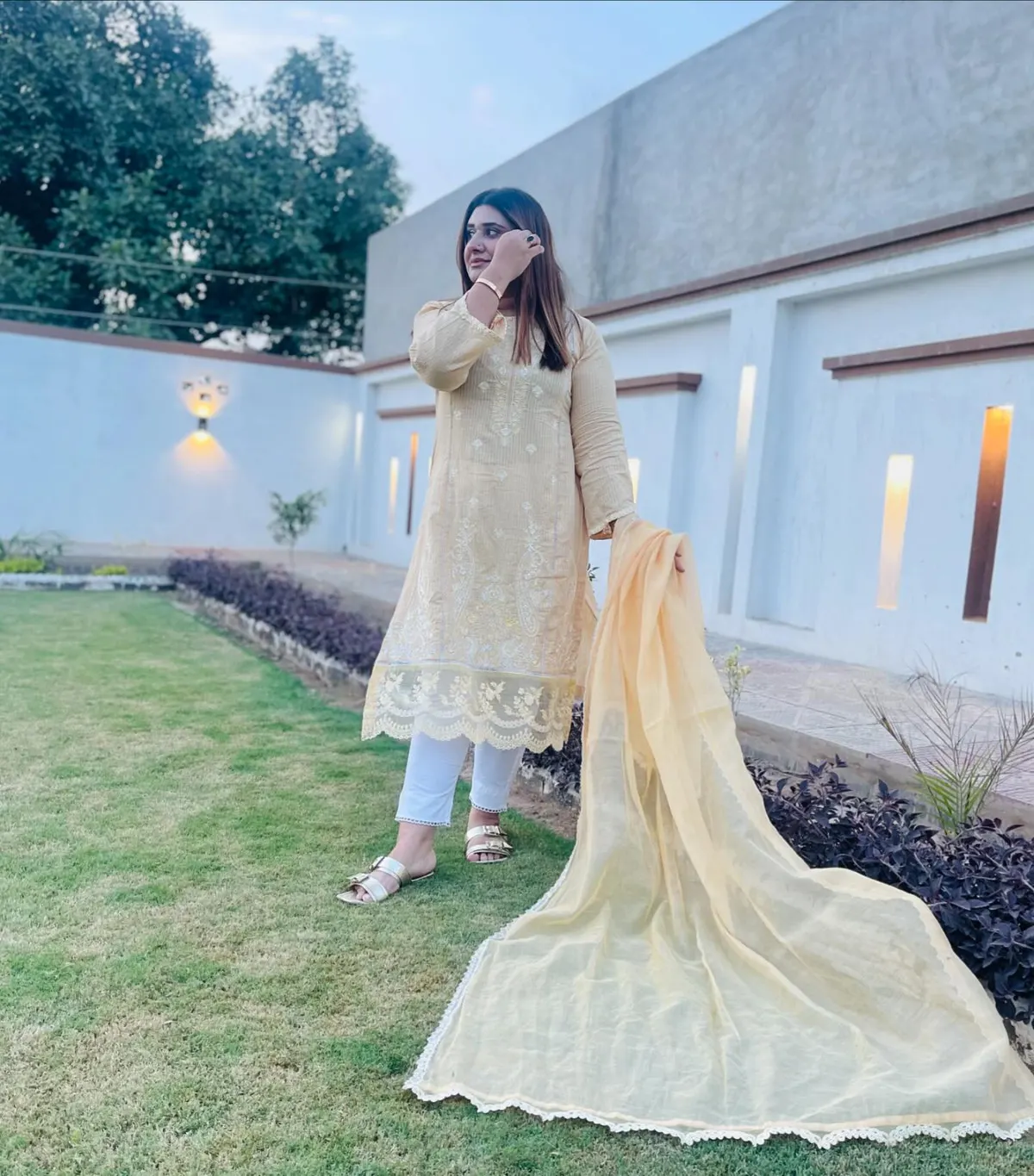
Your barat outfit has probably been hanging in the cupboard since September. The trickier question is everything before it: the dholki at your cousin's house on Thursday, the mayun the week after, and the night someone decides there should be a qawwali. These are the evenings you'll remember, and also the ones people tend to overdress or underdress for. So here are our favourite dholki outfit ideas for this winter's wedding season. They're comfortable, festive without trying too hard, and built from lighter fabrics you can actually sit, sing and dance in.
What to wear to a dholki (and why it isn't a mini-barat)
The dholki is usually the first get-together of the wedding. It tends to happen at the family home, with singing late into the night, and there's a good chance you'll end up sitting on the floor next to the dholak. That changes what you should wear.
This season's guest guides agree on the basics:
- Choose cotton or lawn. A shalwar kameez or a kurta with trousers works well.
- Make sure you can sit cross-legged. Check the cut of the shirt, the width of the shalwar and whether the dupatta stays put.
- Keep jewellery light. Jhumkas or a few bangles are plenty. Save the full set for the barat.
- Follow the invitation. If the hosts have named a colour theme, wear it, whatever any trend guide says (this one included).
Think of the dholki as the warm-up. You want to look like you made an effort without looking like you wandered in from a different function.
Dholki outfit ideas for 2026: fewer, better details
This year's festive mood favours restraint. Fashion editors are describing it as a heritage silhouette, a well-chosen fabric and one standout piece. Handcrafted details are in, and all-over embroidery is out. Even on bridal wear, heavy work has moved to the places that matter most: the neckline, the waist and the dupatta border. That is good news for dholki dressing, because one beautiful detail on a comfortable base is exactly what the night calls for.
The palette is gentle too. Ivory, sage, muted lilac, champagne, pistachio and ice mint are everywhere, with rust and maroon adding warmth for winter. Keeping your fabric, embroidery and accessories in one colour family is one of the simplest ways to look current.
1. Ivory lawn with one statement detail
An ivory or cream embroidered lawn suit with organza patches is the easiest dholki look there is. It reads as festive under fairy lights and is soft enough for a long night on the floor. Wear it with gold or pearl studs and a single bracelet, and let the embroidery do the talking. Our Gulalai and Roohi were made for evenings like this.
2. Hand appliqué for a dressier night
If the dholki is a bigger affair, or it doubles as a mehndi, go for texture over sparkle. Hand appliqué on the front and sleeves of a luxury lawn shirt, paired with a jacquard organza dupatta, has the handcrafted feel this season is all about. A colour like lime also brightens a winter evening.
3. Black chikankari, softened with pastel
A black chikankari dress for wedding functions is a quietly confident choice for an evening dholki or a qawwali night. Pair it with a pastel organza dupatta in lilac, mint or blush so it feels celebratory rather than severe. Families feel differently about guests wearing black, so check with the hosts if you're unsure.
4. Velvet dupatta over a lighter suit
One of winter's nicest trends is the velvet dupatta worn with a non-velvet outfit. Drape a maroon or bottle-green velvet dupatta over a cream lawn or cotton suit and you get warmth, richness and contrast in one easy layer. It's also a smart way to rewear a summer favourite.
Mayun outfit for guests: bright, comfortable, dance-ready
The mayun, dholki and rasm-e-henna sit in the same family: intimate pre-wedding nights of song and henna, ranging from casual to festive. For the mehndi, yellow is the traditional colour, and guests also wear green, orange, pink and turquoise. Before you choose a mayun outfit, ask yourself one question: can I dance in this? Flared kurtas, shararas and ghararas all move well. Applied henna and long sleeves don't mix, so consider three-quarter sleeves or a cuff you can push up.
How to wear lawn in winter (without shivering)
Winter is Pakistan's wedding season for good reason: nobody wants a summer shaadi. But lawn still has a place in it. The general rule from designers is that organza, net and lighter colours suit outdoor and daytime events, while velvet, raw silk and deeper tones suit winter evenings. Indoor, at-home dholkis are the exception, because a warm living room full of people is lawn territory.
To make it work:
- Bring a shawl for the drive home. Pashmina, a velvet dupatta or a fine wool shawl in a tone that matches your suit will look intentional rather than like an afterthought.
- Layer underneath. A thin, fitted thermal or inner under a wider shalwar is invisible and makes a real difference.
- Warm up the colours. Rust, maroon or deep green accessories make a pale lawn suit feel seasonal.
- Mind your feet. Closed khussas or juttis are kinder than open sandals on cold floors.
How to style an organza dupatta
Organza is stiff and sheer. It holds its shape, gives a structured look and adds volume, which is why it looks so good over embroidered suits. A few tips:
- For a dholki, pleat it lengthwise and pin it on one shoulder so it stays put while you sit and clap.
- For a mehndi, let it fall open across both arms. It catches the light beautifully in photos.
- For a hint of colour, choose a pastel organza over a dark or neutral suit. This is the easiest way to soften black.
- Skip heavy necklaces if the dupatta has embroidered borders. One focal point is enough.
Care: Hand-wash organza gently in cold water and never wring it. Press it on low heat with a cotton cloth between the iron and the fabric, or simply steam out the creases. Store it rolled or loosely folded with tissue paper so the crispness lasts for many more functions.
Which piece for which night: a quick cheat sheet
- Dholki at home: embroidered lawn or cotton, organza patches, light jewellery.
- Dressier dholki or mehndi: hand appliqué with an organza dupatta, plus a velvet or pashmina shawl.
- Evening dholki or qawwali: black chikankari with a pastel organza dupatta (check with the hosts first).
- Mayun: yellow, green or bright tones, with a flared silhouette you can dance in.
Before your function dates
At Z by Zunaira Tariq, every piece is made in limited numbers and packed by hand in our small studio. That means the outfit you wear on Thursday night is unlikely to be on three other guests. Browse the latest pieces, then send us a DM on Instagram with your function dates to ask about price and availability. We'll gladly help you pick the right one for each night.
Frequently asked
What should I wear to a dholki as a guest?
Choose something comfortable and lightly festive, such as a cotton or lawn shalwar kameez or a kurta with trousers that you can sit cross-legged in. Keep jewellery light, and if the hosts have named a colour theme, follow it.
Can I wear lawn to a winter wedding function?
Yes, especially for indoor, at-home events like a dholki. Add a thin layer underneath, wear closed shoes and bring a pashmina or velvet dupatta for the drive home.
Is it okay to wear black to a dholki or mehndi?
Families feel differently about guests wearing black, so it's best to check with the hosts. If black is welcome, a pastel organza dupatta softens it and keeps the look celebratory.
How do I keep an organza dupatta from slipping?
Pleat it lengthwise and pin it at one shoulder with a small safety pin or brooch. Organza is stiff, so once it's pinned it holds its shape well through the evening.