wedding guest · styling · winter · chikankari
Can You Wear Black to a Pakistani Wedding? A Winter Guide
Wedding season is here. The invitations are on the fridge, and somewhere in your wardrobe there's a black outfit you love. So the question comes up again: can you wear black to a Pakistani wedding? The honest answer is sometimes, and beautifully, if you choose the right function, read the family well and style it so it feels celebratory rather than sombre. Here is how to decide, and how to wear it once you have.
So, can you wear black to a Pakistani wedding?
Yes, with conditions. Black has long been linked with mourning in South Asian culture, and that's why many aunties still raise an eyebrow at it. Wedding guides published this year agree on two things, though. First, an elegantly styled black outfit can work for evening events, especially the walima. Second, brighter colours are still the safer choice if you're unsure.
The other deciding factor is the family. Embellished black is increasingly accepted at formal evening events in cosmopolitan circles. More traditional families may feel strongly about black, as well as red (the bride's colour) and white. If anything, white and ivory call for even more caution than black.
So it's not really a question of yes or no. It's a question of which function, which family, and how you wear it.
Where black works, and where it doesn't
Each function has its own colour mood. Knowing it is the quickest way to decide whether your black outfit belongs.
Mehndi and dholki: leave it at home
These are the loud, joyful nights of yellow, orange and magenta. Black looks out of place in that sea of marigold, even when it's heavily embellished. Save it for later in the week.
Baraat: possible, but jewel tones rule
The baraat leans towards rich emerald, maroon and plum. Black can sit alongside those colours at an evening baraat in a modern crowd, but it'll be noticed. Only choose it if you're confident the hosts won't mind.
Nikkah: think muted
Nikkah ceremonies tend towards soft, respectful shades such as sage, mauve and champagne. Black feels heavy here, especially at a daytime ceremony at home or in a mosque.
Walima and evening receptions: black's best moment
This is where black really works. The walima is traditionally a pastel affair, and that actually helps you: a black outfit lifted with a pastel dupatta fits the softer palette while still standing out. A black dress for a walima or evening wedding looks deliberate and polished rather than gloomy.
Read the room before you RSVP in black
A few quick checks can save you an awkward evening:
- Ask someone close to the family. A cousin or friend of the bride will know at once whether black is fine or frowned upon.
- Look at the invitation. A formal evening reception at a hotel is far more black-friendly than a daytime gathering at home.
- Consider the elders. If grandparents are front and centre and the family is traditional, choose another colour.
- Check for a theme. Some couples now set colour themes for each function. If there's one, follow it.
Black vs navy for winter weddings
If you're drawn to black but the family sounds conservative, navy is your answer. This winter's palette is led by jewel tones (maroon, emerald and navy), and navy is often described as the perfect alternative to black. It gives you the same depth, the same slimming elegance and the same evening drama, without any association with mourning.
As a rule of thumb:
- Modern evening walima, hotel venue: black, styled with colour.
- Traditional family, mixed-age guests: navy, maroon or emerald.
- Daytime or religious ceremony: neither. Choose soft, muted shades.
How to make black look festive, not sombre
The difference between "she looks stunning" and "is she alright?" comes down to styling. These are the details that matter.
Pair it with a pastel or contrast dupatta
This is the most effective fix there is. Softer pastels like dusty rose, sage and ivory are having a moment this year, and against black they look fresh and celebratory. An organza dupatta works especially well: its sheen catches the light at evening events, and the sheerness keeps the whole look airy rather than heavy.
Organza dupatta styling tips:
- Drape it over one shoulder and let it fall long at the back to show off the sheer fabric.
- For a walima, try it softly over both shoulders, cape-style. It's elegant and easy to manage while you eat and greet people.
- Pin it discreetly at the shoulder so it stays put through hugs and photos.
Let texture and embroidery do the work
Flat black can look severe. Texture makes it look celebratory. Chikankari is still a strong craft this year, mostly seen in white and pastels, so black chikankari stands out at once. Bridal and formal trends are also moving embroidery to the neckline, waist and dupatta border. A black piece with detailing in those places draws the eye upward and feels festive.
Choose warm, bright jewellery
Gold, kundan and pearls warm black up instantly. Statement jhumkas or a single striking necklace is plenty. Let one piece lead. Avoid all-silver, all-black accessories, which can tip the look towards sombre.
Add colour through beauty
A rosy lip, a flush of blush or flowers in your hair all signal celebration. Even a pastel clutch matched to your dupatta pulls the look together.
Black chikankari suit styling for a winter evening
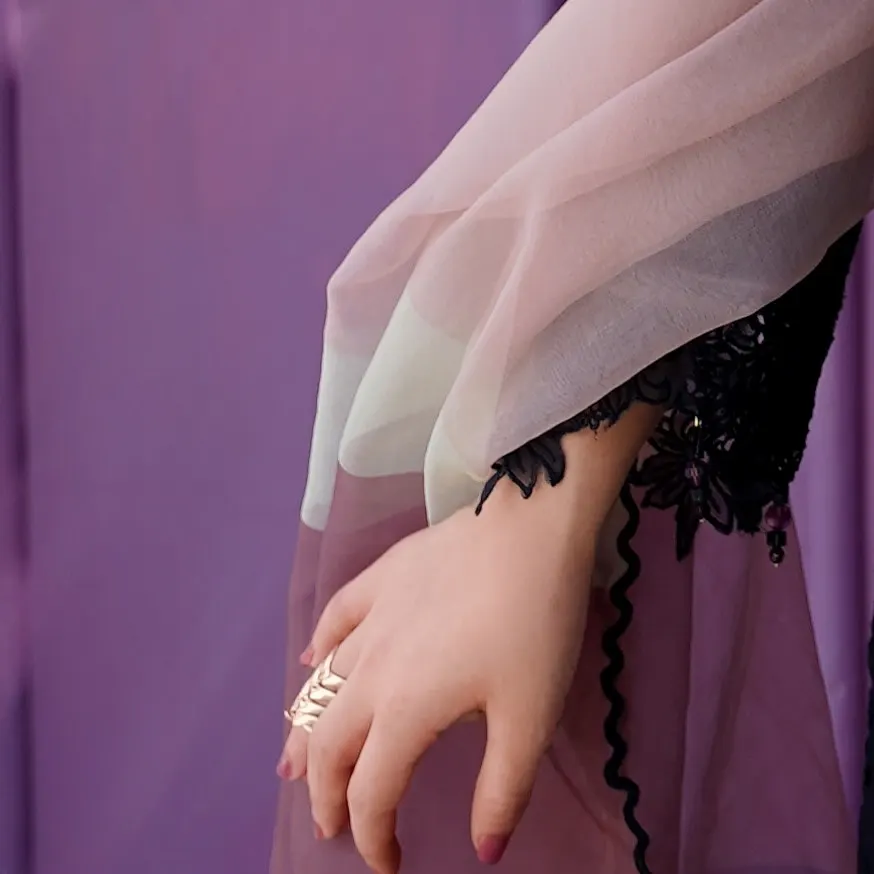
Our own Midnight Blossom was designed for exactly this question: a black chikankari dress paired with a pastel organza dupatta, so the contrast is built in. Because it's in a lighter fabric rather than velvet or raw silk, it's best for indoor or evening functions, such as a hotel walima, a dinner reception or a heated marquee.
To winterise it:
- Add a shawl. Shawls are the key guest layer this season. Choose one in a pastel close to your dupatta, or a warm neutral like camel or ivory, and drape it over your arms on arrival and departure.
- Keep the dupatta visible. If you need warmth, layer the shawl so the organza still shows at the front, or swap to the shawl only for the walk outside.
- Mind your footwear. Closed khussas or block heels in gold suit cooler evenings better than strappy sandals.
We've covered layering lawn for colder months in a separate Journal post, so we won't repeat it here. The short version: lighter pieces work in winter when you add warmth on top rather than giving them up.
You can see Midnight Blossom and our other limited pieces here. If it's calling to you for a walima this season, send us a DM for the price and details.
Caring for black chikankari and organza
Black fades and organza is delicate, so a little care keeps them looking new:
- Hand wash or dry clean. If washing, use cold water and a mild detergent made for darks. Turn the garment inside out to protect the embroidery.
- Never wring. Press the water out gently in a towel.
- Dry in the shade. Direct sun is the quickest way to turn black into charcoal.
- Iron on the reverse. Use low heat and a pressing cloth over the chikankari so the stitches stay raised. Organza needs the lowest setting, never direct high heat.
- Store thoughtfully. Fold the dress in a breathable cotton bag, and roll or hang the organza dupatta to avoid sharp creases.
- Perfume before, not after. Let fragrance dry on your skin before you dress, so it doesn't mark the fabric.
The quick checklist
Before you commit to black this wedding season, run through this:
- Is it an evening function, ideally a walima or reception?
- Is the family comfortable with black? (When in doubt, ask.)
- Have you added a pastel or contrast dupatta?
- Is there texture or embroidery to lift it?
- Are your jewellery and makeup warm and festive?
If you can tick all five, wear your black with confidence. Worn this way, black looks considered, elegant and quietly memorable.
Frequently asked
Is it rude to wear black to a Pakistani wedding?
Not necessarily. Black is linked with mourning, so traditional families may dislike it, but styled elegantly it's increasingly accepted at evening events like the walima. If you're unsure, ask someone close to the family.
Which wedding function is best for a black outfit?
The walima or an evening reception. Avoid black at the mehndi and dholki, which call for bright yellows and oranges, and at daytime nikkah ceremonies, where muted shades are expected.
What colour dupatta goes with a black suit for a wedding?
Pastels like dusty rose, sage or ivory make black look fresh and festive. An organza dupatta adds sheen and lightness for evening functions.
What can I wear instead of black to a winter wedding?
Navy is the closest alternative. It's just as rich and elegant without the mourning associations. Maroon and emerald are also strong choices this winter.