dawat · winter · styling · wedding season
Winter Dawat Outfit Ideas: What to Wear to Evening Dinners
It's November, and the invitations have started. There's a dinner at your khala's to welcome the new bahu, a get-together at your in-laws' before the mehndi, and a friend who insists you come over after the baraat week is done. None of these is a wedding, but none is casual either. If you've been searching for winter dawat outfit ideas, you're probably after the tricky middle ground: dressed up enough to honour the host, restrained enough that you don't look like you came straight from the stage, and warm enough for the drive home.
Here's how to get that balance right, along with a few looks we keep coming back to.
Winter dawat outfit ideas: the rules that actually matter
A dawat is a seated, indoor evening. People see you across a dinner table, close up and for hours. That changes what works.
Go deep with colour. For evening dawats this season, black and jewel tones are the safe choice: emerald, ruby, sapphire and deep maroon. Maroon in particular is being called the colour of this winter, with emerald close behind. Pastels haven't disappeared, but after dark they work best as an accent, such as a soft dupatta over a dark base, rather than the whole outfit.
Fine embroidery plus one standout detail. The current mood is restraint. Embroidery has moved to the neckline, the waist and the dupatta border instead of covering every inch. Choose one thing to be the star, like a beautiful dupatta, a worked neckline or a statement sleeve, and keep everything else quiet.
Don't compete with the wedding party. Guests are being advised to keep things understated, and that matters even more at a dinner held for the couple. If the bride is there in her finery, your job is to look lovely beside her, not to outshine her.
Choose your fabric with the evening in mind. Velvet, raw silk, wool blends and heavy organza lead dressier winter wear. Many Pakistani homes are well heated indoors, though, so a finer suit with smart layering often feels more comfortable through a long dinner than full velvet.
The hero look: black chikankari with a pastel organza dupatta
If you buy one piece for the season's dinners, make it black. A black Pakistani suit for evening is the closest thing to a guarantee: it suits every skin tone, photographs well under warm indoor lighting and quietly signals that you made an effort.
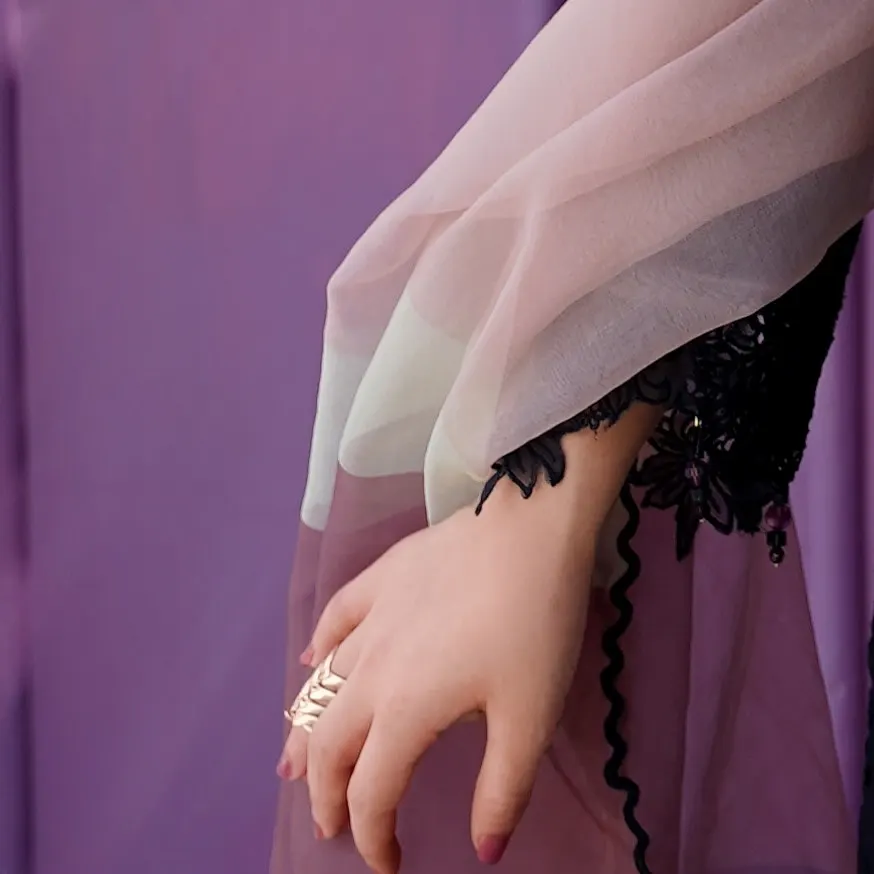
Chikankari is usually treated as summer wear, all whites, pastels and breezy kurta sets. Black chikankari is the exception. The delicate threadwork reads as rich and textured against a dark base, and it fits the 'fine embroidery' rule almost exactly. Our Midnight Blossom pairs a black chikankari dress with a pastel organza dupatta, which covers the dark base and the soft accent in one outfit.
How to style it:
- Let the dupatta be your only colour. Keep jewellery in silver, pearl or soft gold, and skip a second bright shade.
- Pair it with straight trousers or slim cigarette pants for a clean, modern line, in keeping with this year's shift towards cleaner cuts.
- For warmth, add a fine black or charcoal shawl. The pastel organza then shows at the shoulder rather than competing with the wrap.
One standout detail: fine embroidery for family dinners
For a relaxed dinner with relatives, you want something that looks considered without seeming formal. Intricate embroidery on a lighter base does that well, as long as you anchor it for the evening.
Take Roohi, a cream suit with detailed embroidery, organza patches and an embroidered cotton net dupatta. Cream on its own leans towards daytime, so pair it with a deep maroon or bottle-green shawl. Contrasting maroon layers are everywhere this winter, and maroon against cream with warm gold jewellery looks rich without trying too hard. Polki or antique-finish earrings suit the mood.
For the more festive dinner: hand appliqué and jacquard organza
Some dawats are practically part of the wedding, like the dinner the bride's family hosts during mehndi week or the welcome for the couple after the walima. Here you can turn things up a little.
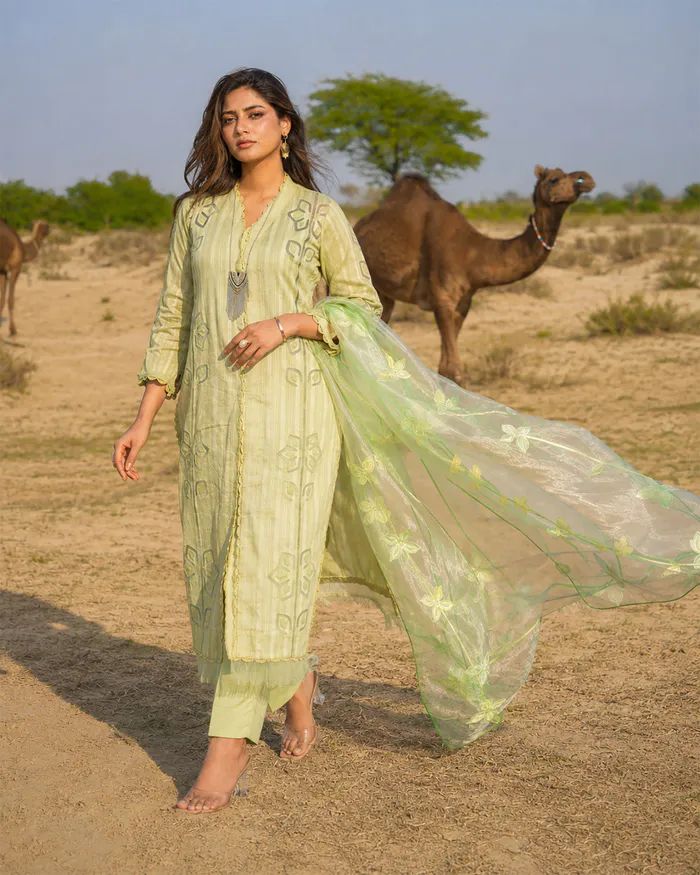
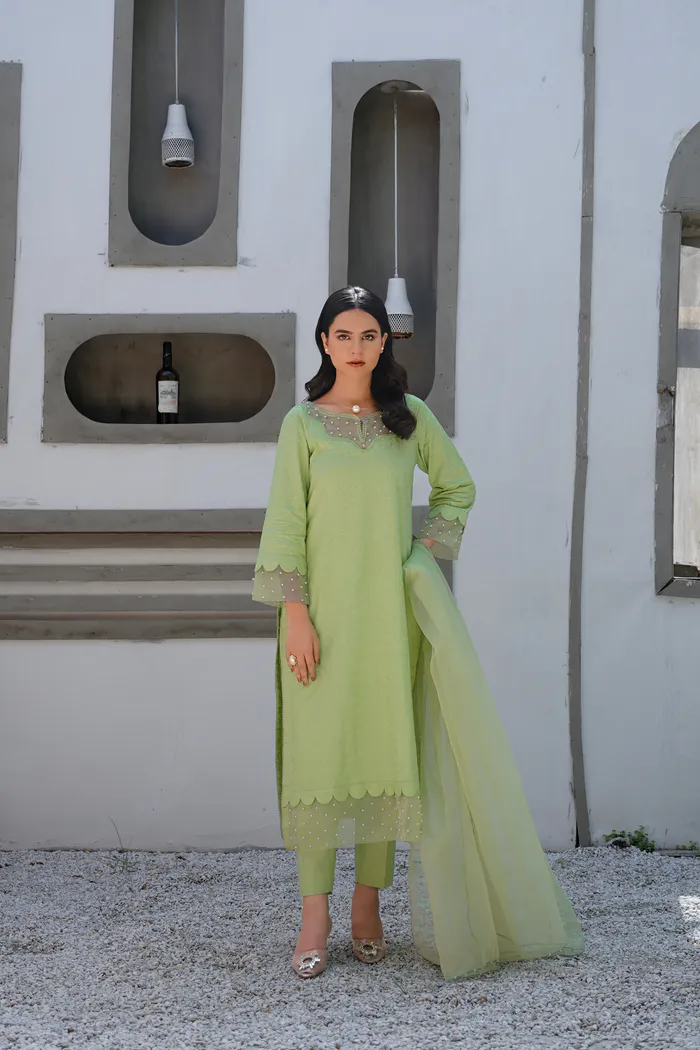
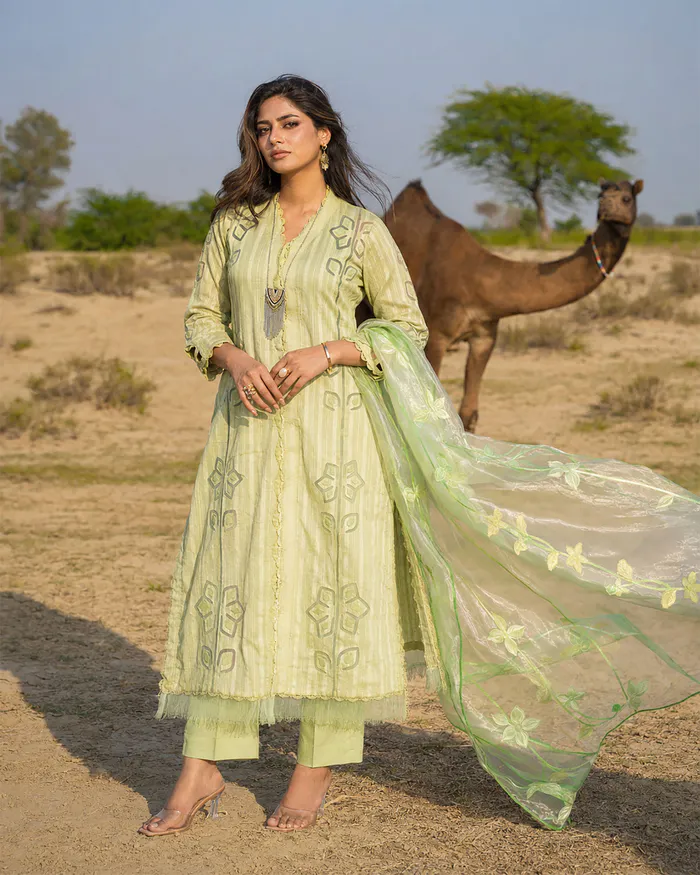
Riha has hand appliqué on the front and sleeves and a jacquard organza dupatta. That's real texture and craft, but it still reads as refined rather than bridal. Its lime shade is bright, so keep everything around it deep and calm: a dark shawl, nude or metallic footwear and one pair of good earrings. Because it's luxury lawn, it's very comfortable in a warm living room. Simply wear a fitted thermal underneath for the journey there and back.
How to wear a shawl over a formal suit
The shawl decides whether your dawat look feels finished or thrown on at the last minute. A few practical habits help.
- Pick a shade from the outfit or go one tone deeper. A charcoal shawl over black, or maroon over cream, looks intentional. A clashing print undoes the whole look.
- Choose fine over bulky. A thin pashmina or fine wool drapes well and doesn't flatten the embroidery underneath.
- Drape it one way for arriving and another for dinner. Wrap it over both shoulders for the cold walk in. Once you're seated indoors, slide it to one shoulder so your neckline and dupatta show.
- Manage the dupatta. Fold it lengthwise and let it fall from one shoulder, with the shawl over the other. If you pin organza, use a small fine pin at a seam and never a heavy safety pin through the open weave.
- Layer underneath. A thin, close-fitting thermal under your kameez keeps you warm without any visible bulk.
One piece, many dawats
With several invitations in a few weeks, rewearing is smart planning. One strong base can look different every time.
- Swap the dupatta. Try your pastel organza one evening and a deep maroon dupatta the next.
- Change the shawl. Black gives a sleek look, while an embroidered shawl looks more festive.
- Rotate the bottoms. Straight trousers look polished, and palazzos or a flared shalwar feel softer and more traditional.
- Change the jewellery. Pearls one night and antique gold jhumkis the next make the same outfit feel new.
Jewellery, shoes and finishing touches
Pick one statement. At a dinner table, people mostly see your face and hands, so earrings and a ring matter more than a heavy necklace. Wear statement earrings or a statement necklace, but not both.
Choose comfortable shoes. Some dawats end on floor cushions and some involve standing in a crowded lounge. Embellished khussas or low block heels cope with both.
Keep the bag small. A compact clutch or potli is enough.
Go light on fragrance. You'll be eating close to other people, so a soft scent is kinder. Apply it to your skin, not the organza.
Caring for organza and embroidery after the night
Air the outfit out before putting it away, because food smells settle into fabric. Spot-clean marks gently instead of washing the whole suit. Iron embroidery inside out on a low setting with a pressing cloth. Store organza folded loosely with tissue between the layers so it doesn't crease sharply, and keep it away from rough fabrics that could snag the weave.
At Z by Zunaira Tariq, every piece is made in limited numbers and packed by hand in our small studio, so what you wear to dinner is unlikely to be sitting across the table on someone else. If a look here suits your season of invitations, browse the latest pieces or send us a DM to order. We'll share details and help you style it.
Frequently asked
What colours are best for a winter dawat?
Black and jewel tones such as emerald, ruby, sapphire and deep maroon are the safest evening choices this season. Use pastels as an accent, for example a soft organza dupatta over a dark suit.
How do I avoid overdressing for a dawat during wedding season?
Choose fine embroidery with one standout detail, such as a dupatta, neckline or sleeve, instead of heavy all-over work. Keep jewellery to one statement piece so you don't compete with the bride or the wedding party.
Can I wear a lawn suit to a winter dinner?
Yes. Many homes are well heated indoors, so a luxury lawn suit can be very comfortable. Wear a fitted thermal underneath and a fine pashmina or wool shawl for the journey.
How do I style an organza dupatta with a shawl in winter?
Fold the dupatta lengthwise over one shoulder and drape a fine shawl over the other. Wrap the shawl fully when you're outdoors, then slide it back indoors so the organza shows.