organza · wedding season · styling · dupatta
Organza Dupatta Styling: One Suit, Many Wedding Looks
The invitations are stacking up: a mehndi this weekend, a nikkah the next, a walima somewhere in between. If the thought of finding a new heavy formal for every single event makes you tired, you are not alone, and you don't need to. This season, organza dupatta styling is the smartest trick in a wedding guest's wardrobe. One good organza dupatta can take a suit you already love and make it festive, again and again, with a change of drape, colour and accessories. Here is how to make it work, including what to do when the evenings turn cold.
Why organza dupatta styling is the easiest wedding-season upgrade
Across this year's festive trend coverage, organza keeps coming up as the quickest way to lift a simple suit. One recent festive-season guide puts it plainly: an organza dupatta can make a plain outfit look festive almost instantly. The dupatta has stopped being the finishing extra and become the main styling piece, the thing people notice first.
That shift is good news for anyone who prefers wearing beautiful clothes over storing them. A lawn or cotton suit in a clean, quiet shade becomes your base. The dupatta does the talking. Look for details that catch the light and the camera: mirror work, gota, pearl edging, embroidered borders, or a neat finish like lace, piping, tassels or a crisp hem.
Organza vs chiffon: which dupatta, when?
Both are sheer, but they behave very differently.
- Chiffon is soft and fluid. It falls close to the body and moves with you, which suits relaxed, flowing looks.
- Organza has body and structure. It holds its shape, sits crisply on the shoulder and gives a dressier finish, which is exactly why it reads as festive even over a simple suit.
If your event calls for polish and you want your dupatta to stay where you put it in photos, organza is the one. If you want ease and drape for a long, casual dawat, chiffon still has its place.
How to style an organza dupatta: five looks from one suit
There is no single correct drape this year; the trend is flexibility, with the dupatta as the focal point. Try these with the same base suit.
1. The one-shoulder cascade
Pleat the dupatta lengthwise and pin it on your left shoulder, letting the full width fall behind you. It shows off an embroidered border beautifully and keeps your hands free for the buffet. Use a small brooch or a hidden safety pin through the pleats.
2. The classic both-shoulders frame
Drape it across the front of the neck and let both ends fall behind. This works well for a nikkah or any formal moment where you want a composed, traditional silhouette.
3. The open shawl drape
Open the dupatta fully and wear it over both shoulders like a light wrap. With structured organza, this frames the face and gives a soft, editorial outline in photographs.
4. The single bold accent
The best wedding-guest advice this year is one bold accent, not five. Keep the suit quiet and let a contrasting dupatta do all the work. A pastel organza dupatta with a black suit is the perfect example. Our archive piece Midnight Blossom, a black chikankari dress with a pastel organza dupatta, is built on this idea: the chikankari stays understated, and the dupatta lifts the whole look.
5. Tone on tone
Matching shades across kameez, dupatta and trousers is trending for a polished, editorial finish. Choose a dupatta one or two shades lighter or deeper than your suit for depth without contrast.
Colour by event: choosing your organza dupatta for a wedding guest outfit
If you are planning one base suit and rotating dupattas, this colour map from current wedding-guest guidance is a helpful starting point:
- Mehndi: bright tones like magenta, coral and turquoise
- Baraat: jewel tones like emerald, royal blue, maroon and plum
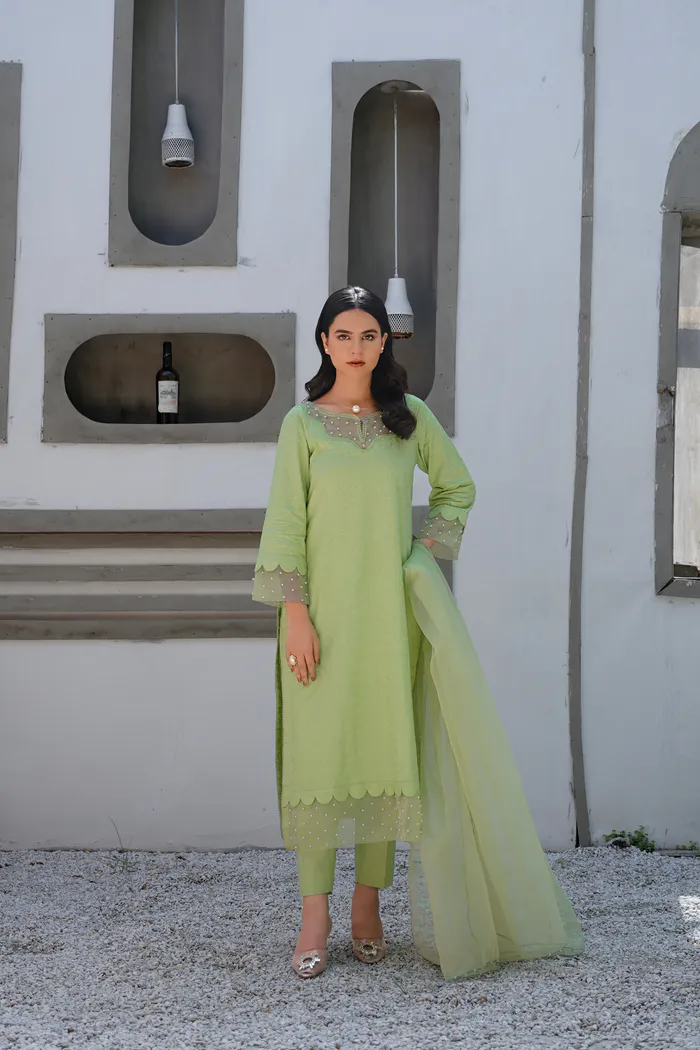
- Nikkah: muted tones like sage, dusty blue, mauve and champagne
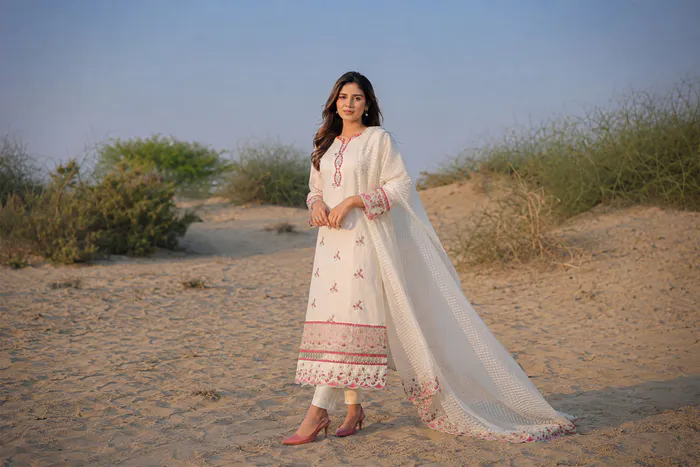
- Walima: pastels like blush, powder blue, lilac, mint and ivory
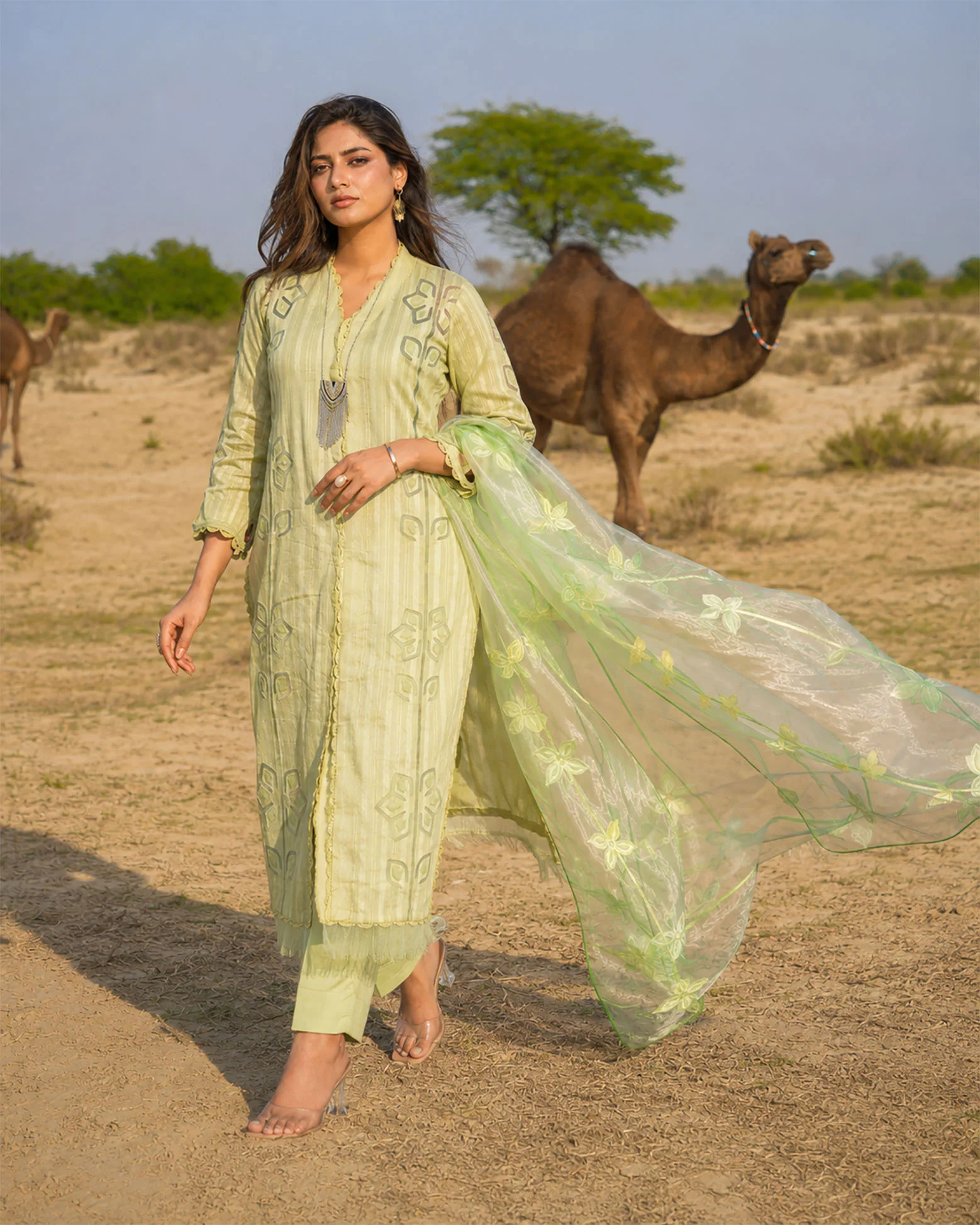
For daytime events, lean towards pastels and light organza with soft embroidery. A jacquard organza dupatta over a lawn suit is lovely here; it is the pairing behind Riha, where hand applique on the front and sleeves meets a jacquard organza dupatta. That front-panel contrast against a lighter dupatta is one of the season's quieter but most elegant trends.
For a nikkah or an intimate dawat, a net dupatta with organza patches feels softly formal. Roohi, with its embroidered cotton net dupatta and organza patches, sits comfortably in that muted, graceful space.
You can see what we currently have available on our new arrivals page.
Organza dupatta in winter: staying warm without hiding the look
Wedding season and cold evenings arrive together, and a sheer dupatta alone won't keep you warm. The trick is to treat the organza as your photo layer and add warmth around it.
- Wear a shawl to the venue. Arrive wrapped, then fold the shawl over a chair or your arm for photos and the main event.
- Choose a warmer base suit. Winter fabrics like khaddar, karandi, dhanak and velvet all pair well with organza. A shorter, structured kameez looks especially sharp with a shawl.
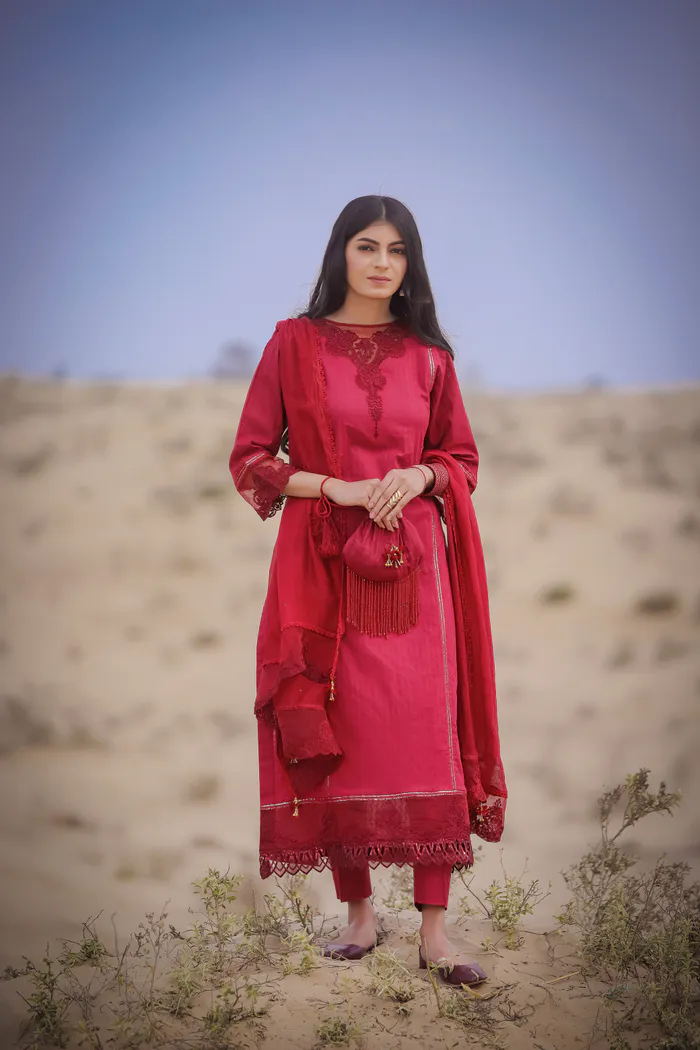
- Go jewel-toned. Deep wine maroon has been called the season's standout, followed by emerald; red, aubergine and cobalt are also showing up. A maroon organza dupatta over a contrasting suit is a very current way to wear colour.
- Put organza on the shirt instead. If you want something easier to layer, choose a shirt with organza details and pair it with a plain dupatta or shawl. Gulalai, a premium lawn shirt with embroidered motifs and organza patches, works this way: the festive detail lives on the shirt, so the outer layer can be as cosy as you like.
- Layer underneath, not on top. A fitted thermal or slim inner layer under your kameez keeps the outline clean.
How to make a simple suit look festive: finishing touches
Once the dupatta is chosen, a few small choices complete the look:
- Jewellery: with a heavily worked dupatta, keep jewellery to one statement piece, earrings or a bangle stack, not both.
- Footwear: khussas or block heels in a tone pulled from the dupatta border tie everything together.
- Bag: a small clutch in metallic or a dupatta shade. Skip anything that competes with the embroidery.
- Hair: a low bun or soft side sweep keeps the neckline open so the drape shows.
Caring for organza, net and delicate work
Organza, net and tissue silk need careful handling. A little attention keeps a good dupatta looking new across a whole season of events.
- Store it rolled or loosely folded in a cotton bag, away from sharp jewellery and zips that can snag.
- Steam, don't press hard. Use low heat with a pressing cloth between the iron and the fabric, or a garment steamer held slightly away.
- Spot clean first. For small marks, dab gently. For anything embellished with gota, mirrors or pearls, dry cleaning is the safest choice.
- Pin through pleats, not open fabric. Pins through a single layer of organza can leave marks.
- Air it after every event before putting it away.
At our small studio, each piece is packed by hand for exactly this reason: delicate fabrics deserve care from the first fold.
One dupatta, a whole season of looks
You don't need a new heavy formal for every invitation. A quiet suit, a well-chosen organza dupatta, and a little thought about drape and colour will carry you from mehndi to walima, beautifully and comfortably. If a piece here has caught your eye, our limited pieces are ordered through Instagram, and prices are shared on request: just send us a message and we will help you find your look.
Frequently asked
Can I wear an organza dupatta with a plain suit to a wedding?
Yes. A plain suit in a clean shade makes the perfect base. Choose an organza dupatta with a detail like an embroidered border, gota, mirror work or pearl edging, and keep jewellery to one statement piece so the dupatta stays the focal point.
How do I wear an organza dupatta in winter?
Pair it with a warmer base suit in khaddar, karandi, dhanak or velvet, and wear a shawl over it on the way to the venue. Take the shawl off for photos and the main event, and add a slim inner layer under your kameez for warmth.
Is organza or chiffon better for a wedding dupatta?
Organza has more structure and holds its shape, so it gives a crisper, dressier finish. Chiffon is softer and more flowing. For formal wedding events where you want a polished look in photos, organza is usually the better choice.
How should I clean an organza dupatta?
Spot clean small marks gently, steam on low heat with a pressing cloth, and dry clean anything embellished with gota, mirrors or pearls. Store it rolled or loosely folded in a cotton bag, away from zips and sharp jewellery.